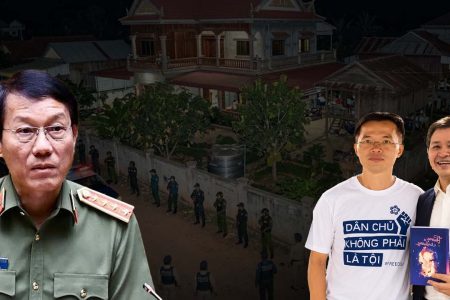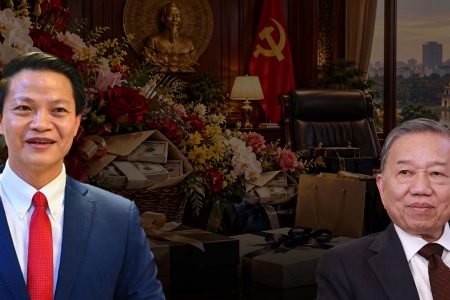
On the afternoon of August 24, 2026, the 10th Executive Committee of the Vietnam Writers’ Association officially announced the dismissal of Mr. Nguyen Quang Thieu from his position as Chairman of the Association and appointed Army Colonel and writer Nguyen Binh Phuong to temporarily take charge.
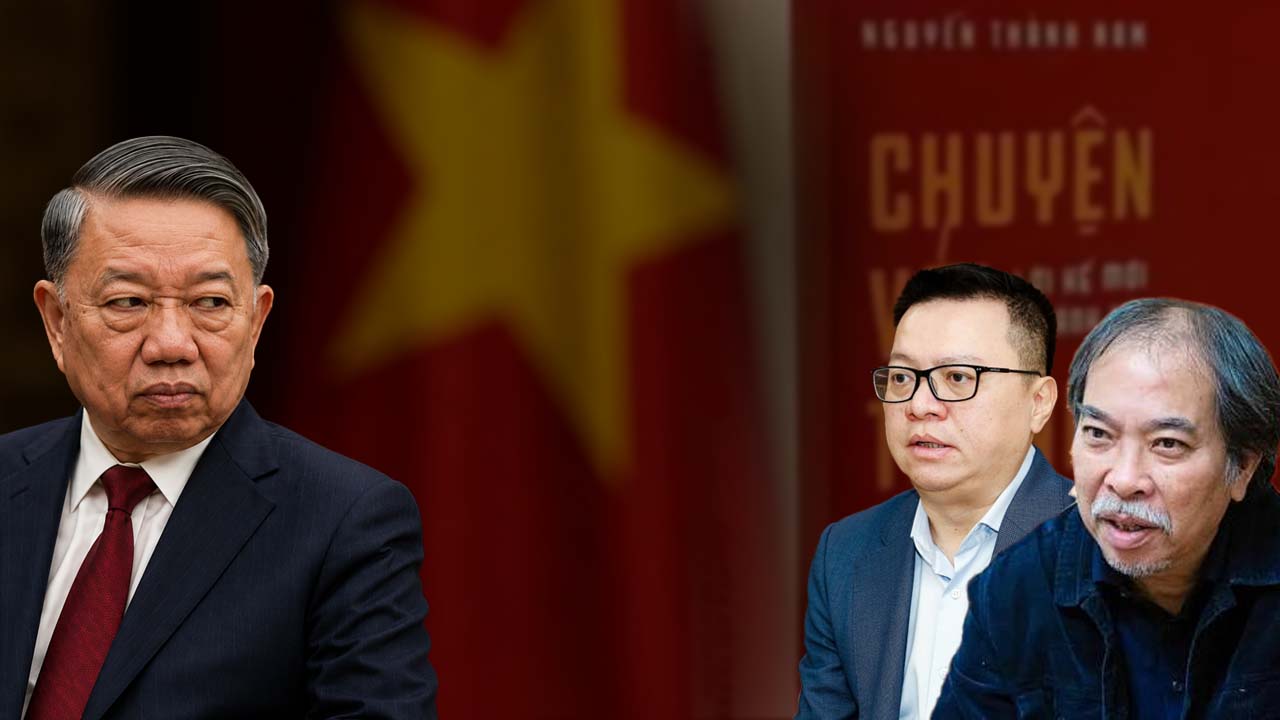
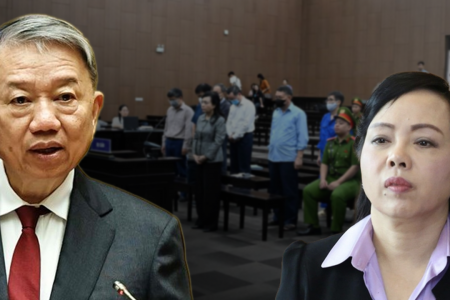
This decision came shortly after the book *Chuyện với Thanh* was censored, and Mr. Thiều was disciplined with “removal from all Party positions” due to his involvement in management irregularities at the Writers’ Association Publishing House.
However, according to well-informed sources, the decision to replace Mr. Thieu with a writer who is also an Army Colonel is not merely a routine internal disciplinary procedure.
Notably, in recent days, the story of the Hanoi government’s plan to relocate the “Die So the Motherland May Live” monument from the Hoan Kiem Lake area has suddenly erupted into a fiercely debated hot topic in public opinion.
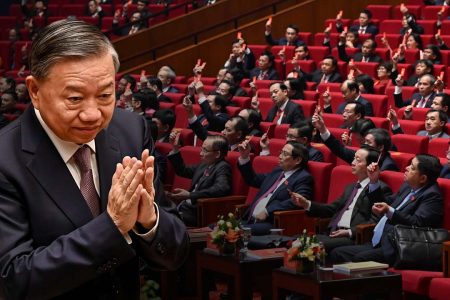
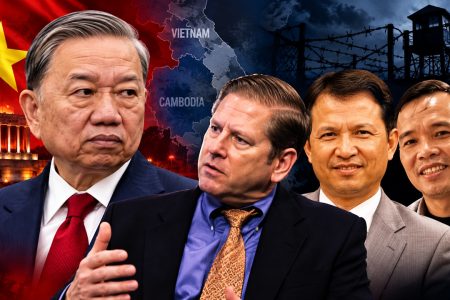
According to observers, these events reflect a thorny reality at the highest levels of Ba Dinh’s political leadership, as General Secretary and President To Lam continues to face undercurrents of unrest from conservative factions.
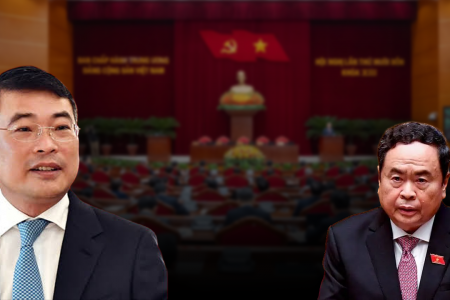
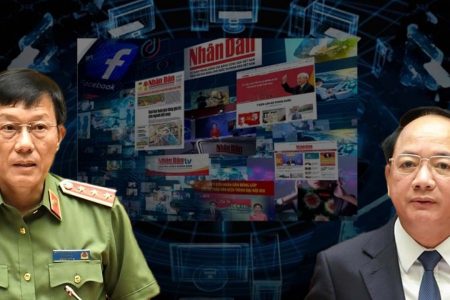
At the same time, the current political overhaul is not only targeting key institutions but is also spreading to the realms of ideology, culture, and the media.
The fact that Mr. Nguyen Quang Thieu was forced to step down as Chairman of the Writers’ Association, while the political future of Le Quoc Minh, Editor-in-Chief of Nhan Dan, remains unclear, also indicates that the purge of the apparatus shows no signs of stopping.
This ambiguity and prolonged uncertainty are creating a sense of unease within the system itself, where the line between addressing misconduct and purging factional rivals has become extremely tenuous and unpredictable.
Furthermore, the story of the “Die So That the Motherland May Live” monument—which Hanoi leaders plan to immediately remove from the Hoan Kiem Lake area—has quickly erupted into a fiercely debated public issue.
This is believed to be a reaction and a source of suspicion from the group of online “public opinion agents” posing as veterans, led by “Red Guards” such as Mr. Phan Trung Can.
According to Facebook user Nguyen Ha—an associate professor and doctor of philosophy, as well as a member of the Hanoi Writers’ Association—who wrote on his personal Facebook page, this issue is considered “extremely distressing” and unsettling.
Consequently, a “conspiracy theory” aimed at erasing traditional revolutionary symbols, originating from personal posts by veterans, quickly gained widespread support from the public.
When a simple urban beautification decision was “escalated” and perceived as a move to deny history in the service of reformist or liberal agendas, it revealed that the AK-47 forces’ trust in Mr. To Lam has reached an extremely sensitive level.According to experts, for a political system to operate smoothly and harmoniously, it cannot rely solely on the police or the military; it must also effectively control the ideological front to maintain social consensus. The rifts stemming from the book “Chuyện Với Thanh,” now compounded by sensitive controversies surrounding the “Quyết tử” monument—a historical symbol located in the heart of the capital—reflect that the crisis of trust has not been thoroughly resolved. The fact that Hanoi’s leadership has resorted to decisions driven by “special interests” to replace personnel or relocate a monument does nothing to restore the social consensus that has already been severely damaged by a long series of upheavals at the highest levels.For General Secretary To Lam, as long as political decisions remain shrouded in a lack of openness and transparency, and as long as special interests continue to prevail,
the wave of opposition from the military faction’s “public opinion cadres” will continue to pose a thorny problem that hinders genuine stability within the Party and fails to address the root causes of the unrest.
Trà My – Thoibao.de