The harsh sentence recently handed down by the Ho Chi Minh City People’s Court on the afternoon of September 30, 2026, against a group of police officers who organized a drug-fueled “rave” that led to the death of a 15-year-old girl is not merely a routine judicial decision.
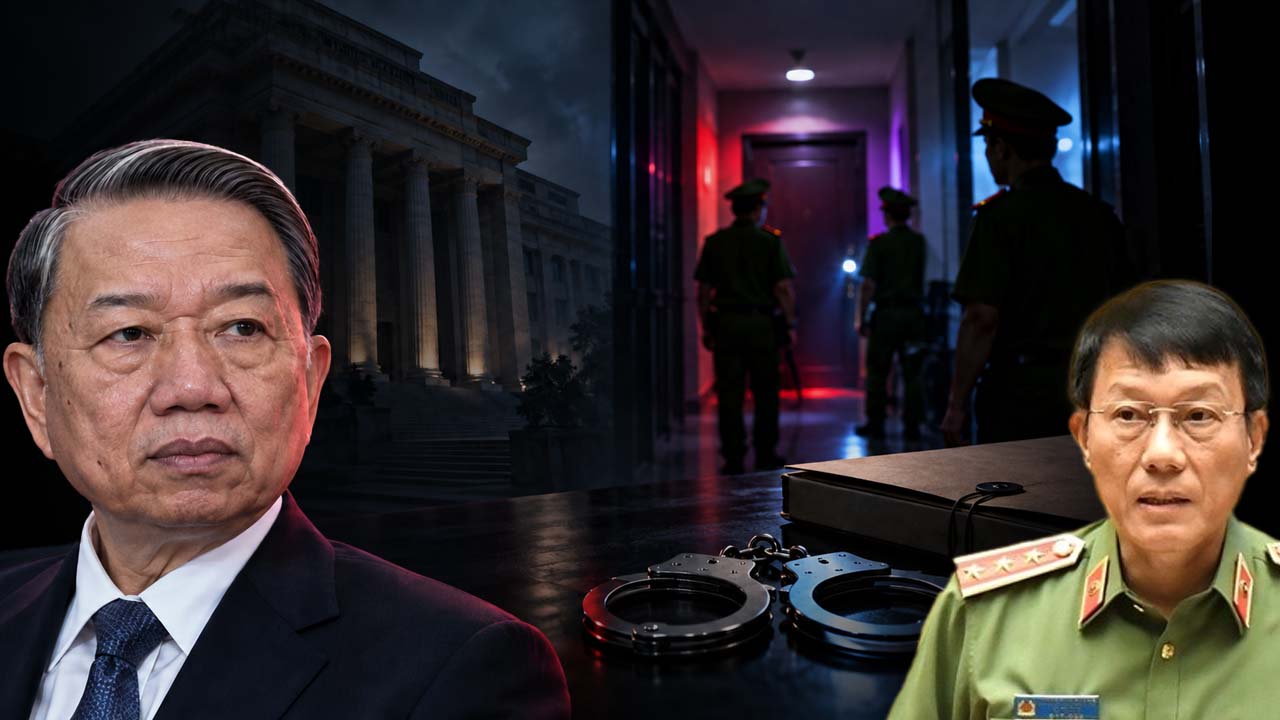
The 22-year prison sentence handed down to former Police University lecturer Pham Van Hung, and the 17-year sentence for former police officer Do Tan Phuc, have laid bare a deeply troubling reality: the profound corruption within a segment of the police force tasked with upholding the law of the state.
What has shocked public opinion even more is not just the tragic death of the 15-year-old female victim, but the fact that this criminal network was established, operated, and “protected” by police officers and instructors who are currently serving in the “sword and shield” force.
According to observers, the case file reveals an operational process that is so professional and callous—to the point of being inhuman—that it is almost unimaginable.
Specifically, as early as the beginning of 2023, while still serving as a police officer in District 4, Ho Chi Minh City, Do Tan Phuc personally rented three apartment units, soundproofed them, and equipped them with modern sound and lighting systems to turn them into drug dens for the “party scene.”
By mid-September 2023, two former police instructors, Dang Vinh Quang and Nguyen Trung Hieu, contributed 90 million dong to join Phuc in opening another similar “ecstasy den” on the 11th floor of a nearby luxury apartment building.
Notably, this criminal group not only assigned roles for managing the venue, collecting room fees, and arranging drug purchases on behalf of others but also collected monthly “protection” fees. The height of their cruelty occurred when a 15-year-old girl fell unconscious after being forced to use illegal drugs throughout the night.
Even more gravely, instead of immediately taking the victim to the emergency room, the group prioritized cleaning up the scene, seizing evidence, and erasing all traces to destroy evidence before finally taking the girl to the hospital—a decision that directly deprived the victim of her chance at survival.
This incident occurred as the country enters a “New Era,” raising questions about the current model of “police rule” in Vietnam. Under the leadership of Mr. To Lam, the People’s Public Security Forces are regarded as the “sword and shield” of the regime, holding a pivotal position within the political apparatus and enjoying absolute favor and trust.
However, when this force is granted excessive and unchecked power, it becomes a arrogant and unaccountable force, and corrupt elements immediately emerge—to the point of personally transforming an apartment complex into a den of vice right in the heart of the country’s largest metropolis. This reflects a deep-seated flaw in the police force’s internal oversight mechanisms and personnel management.
No matter how powerful a police force may be, it will face the risk of self-corrosion if its power is not checked by an independent and transparent mechanism.
The fact that police officers could openly organize and operate a drug ring for an extended period without being detected reveals serious gaps in efforts to prevent corruption from within the organization.
The chilling indifference toward the life of a teenage female victim serves as a costly warning. Namely, when professional ethics erode, the sword meant to uphold the law can quickly become a tool serving the interests of corrupt factions within the police force.
The public views this case as a major test of Mr. To Lam’s credibility. Without sweeping reforms to curb leniency and factional interests within the police force, these moral cracks will continue to pose a direct challenge to Vietnam’s current one-party political system.
Tra My – Thoibao.de