First, it must be emphasized that Decree 178 is an extremely sound policy that addresses the urgent practical needs of streamlining the administrative system in Vietnam.
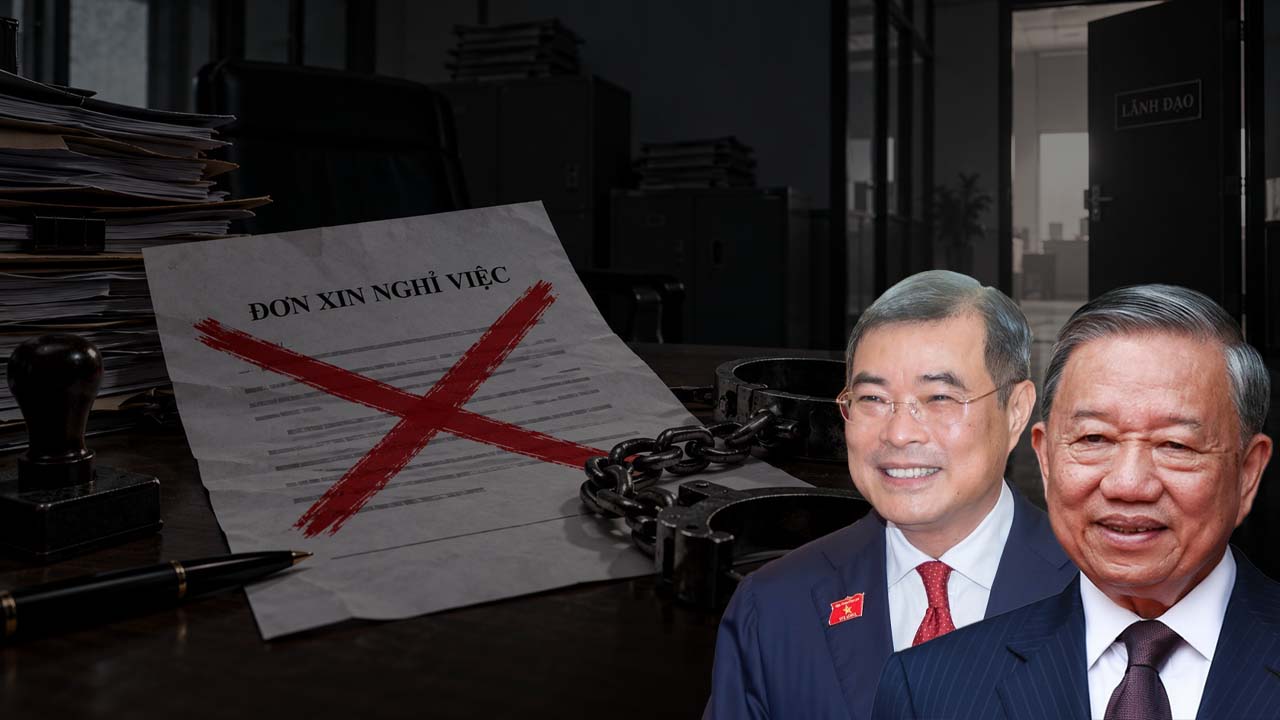
However, the results of the recent audit by the State Audit Office have revealed “bitter” drawbacks resulting from the hasty and ill-considered implementation by key agencies of the Communist Party of Vietnam.
Consequently, a policy originally intended to optimize the state apparatus has been exploited for personal gain and severely distorted, resulting in immense economic losses as well as bitter lessons regarding the proper utilization of talent.
One of the most bitter realities exposed by the implementation of Decree 178 is the sense of exhaustion and disillusionment among dedicated, talented, and decent officials.
There is a harsh truth that must be acknowledged frankly: the workplace remains a stifling environment manipulated by cliques, factions, and power struggles over group interests. Therefore, for those who are forthright and principled, this is an environment that is far too toxic.
In this context, as a large number of “decent people” refuse to get entangled in profit-seeking cliques, many capable officials choose to let go, proactively requesting early retirement under Decree 178 to preserve their peace of mind.
Talented individuals do not fear hardship or work pressure; they only become disheartened when they see their integrity viewed as an obstacle by interest groups and find themselves isolated by the majority seeking personal gain.
What is most concerning is when this “humane” policy is transformed by interest groups into a sophisticated “trap” to legally purge those who do not align with their faction. Interest groups are willing to relax standards and circumvent the law to quickly approve requests for outspoken officials to retire under Decree 178.
By the time inspection or audit agencies step in, the damage is already done. As a result, the approval group—which acted with the motive of removing those who don’t fit in from the team—is only given a perfunctory reprimand or warning.
Meanwhile, the upright official has suddenly been labeled a “willful violator” and will soon face disciplinary action.
This is an extreme injustice: while cunning leaders achieve their dual objectives, the upright individual is forced out as if they were a profiteer.
According to experts in public administration, a resignation request is merely a unilateral wish of an individual and does not, in and of itself, result in legal consequences.
Consequences such as improper disbursement of public funds or falsification of records only truly arise when an authorized official intentionally approves an error or neglects their duty as the gatekeeper.
If the inspection agency attributes liability for violations to the person requesting leave while downplaying the intentional misconduct of the approver, this constitutes a reversal of administrative justice.
Accordingly, the person requesting leave bears only the civil obligation to repay funds received in violation of regulations, while disciplinary or criminal liability must fall on those in power who condoned or intentionally committed the violations.
Against the backdrop of General Secretary To Lam’s vigorous campaign to lead the country into a New Era—which demands high efficiency from the government apparatus—
to ensure that the law truly serves as a shield protecting the honest and that policies are not turned into tools for mutual sabotage, state management requires a fundamental shift in mindset.
First and foremost, the judicial and inspection systems must thoroughly delineate legal responsibilities, clearly separating the financial restitution obligations of the beneficiaries from the criminal liability of the leaders who approved the errors.
In addition, transparency must be strengthened by mandating disciplinary action and publicly disclosing the identities of the officials who signed off on the errors, thereby putting an end to the culture of collective irresponsibility where no one takes personal accountability.
Trà My – Thoibao.de