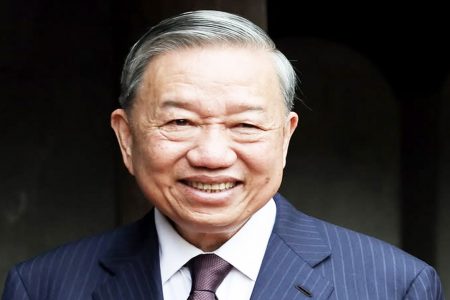
The message “for major tasks, seek out the best people,” declared by General Secretary and President To Lam, immediately prompted public discourse to revisit a deep-rooted problem in personnel management in Vietnam.
Namely, the situation where officials pay lip service to “rolling out the red carpet to invite talented people,” but in reality tie their hands with a hiring mindset that revolves around the so-called “circle of acquaintances.”
The public recognizes a disheartening reality for the intellectual community: many talented individuals are recruited with grand proclamations, but once they enter the system, they immediately find themselves in a situation where “everything they do requires approval from superiors.”
According to experts, the most serious bottleneck is that those with deep expertise are forced to work under superiors who lack competence and have no understanding of the field—and who even lack the courage to make decisions.
As a result, countless research projects and strategic proposals that consumed public funds ultimately end up “shelved” simply because managers lack the competence to understand them—and, more importantly, lack the courage to take responsibility due to their lack of managerial skills.
This disconnect has exposed the superficial nature of talent management in Vietnam, where talented experts and intellectuals are treated merely as tools to “legitimize” decisions that have already been predetermined.
To untangle this knot, public administration experts have proposed the “6 Rights” principle: the right person, the right task, the right authority, the right data, the right accountability, and the right evaluation method.
At the same time, if the government truly intends to utilize intellectual capital effectively, the public administration apparatus must be willing to grant experts independent space along with commensurate authority.
Public opinion holds that forcing talented individuals to serve under incompetent individuals from interest groups—who are essentially the protégés of higher-level leaders—not only eliminates the motivation to contribute.
It also turns the Communist Party of Vietnam’s talent recruitment campaigns into expensive spectacles that are, in essence, hollow, as has been evident.
Hong Linh – Thoibao.de